Resources

This page will be regularly updated as the Cable Connectivity and Resilience Centre's new research and resources are finalised. Watch this space or contact us to sign up for updates and learn more about our upcoming reports, resources and research.
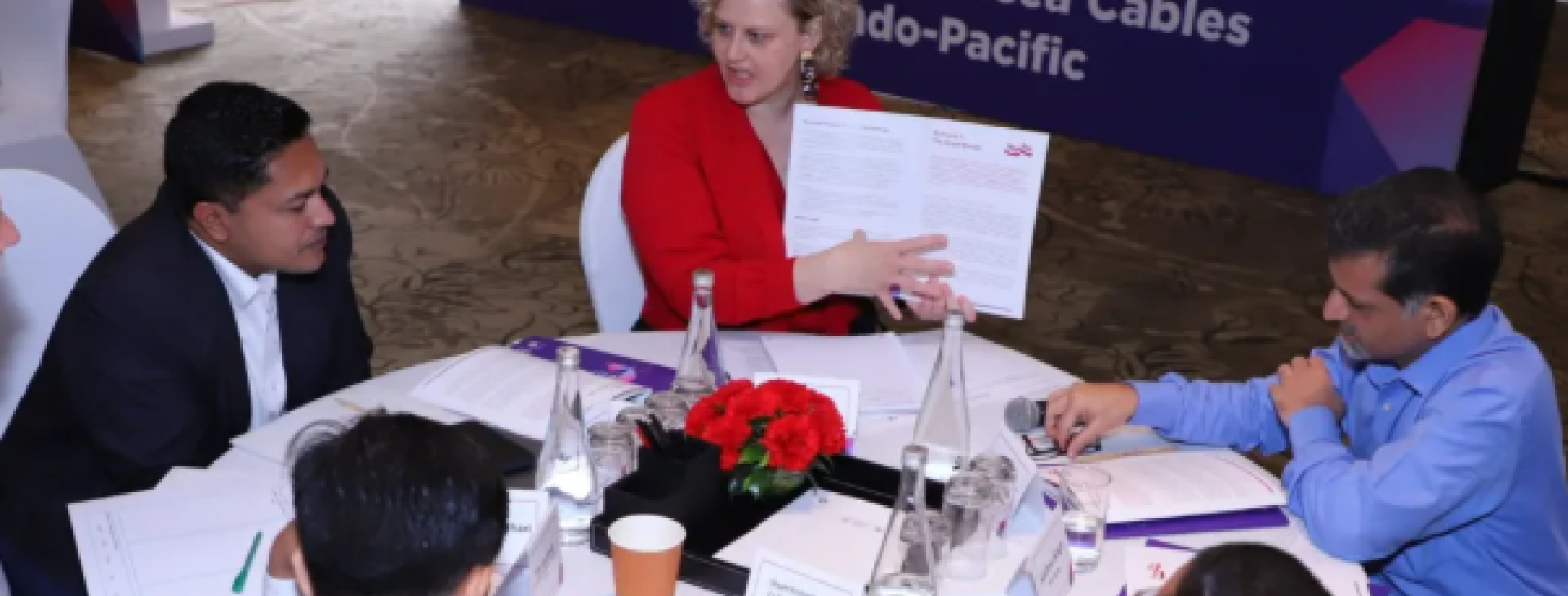
Participants at a workshop
Date
Title
Cover of the Best Practice Toolkit
2026-08-13

Best Practice Toolkit: Subsea Telecommunications Cable Policy and Regulation in the Indo-Pacific – Read more

The Best Practice Toolkit is intended to support governments across the Indo-Pacific to strengthen the policy and regulatory frameworks that govern the planning, protection and management of subsea telecommunications cables. Developed by the Cable Connectivity and Resilience Centre, the Toolkit consolidates international best practice and practical guidance drawing on examples from across the Indo-Pacific to support informed, real-world decision-making. The Best Practice Toolkit is for people working within government across the Indo-Pacific who are responsible for, or advise on, subsea telecommunications cable policy and regulation, including: policymakers and regulatorsofficials working across digital connectivity, telecommunications, infrastructure, security, and economic developmentstate-owned enterprises managing cable infrastructureThe Toolkit includes: Toolkit Overview – background information and instructions on how to use the Toolkit.Toolkit packs - 12 thematic packs, each focused on a specific aspect of subsea telecommunications cable policy or regulation, with core guidance and supplementary documents that provide additional detail, examples and context.The Toolkit Overview is available to download below, and to request access to thematic packs, please email the CCRC at undersea.cable@dfat.gov.au.

Read more...

Cable construction Cable Protection Zones Cable security Environmental management Legal and regulatory frameworks Maritime safety Permitting and licensing Telecommunications infrastructure
Cover of the research report Low Earth orbit satellites in the Pacific, showing a Pacific coastline and with the report name overlaid.
2026-04-24

Low Earth orbit satellites in the Pacific: Opportunities, risks, and governance for resilient connectivity – Read more

Low Earth orbit satellites in the Pacific: Opportunities, risks, and governance for resilient connectivity explores the role of low Earth orbit (LEO) satellite systems in the Pacific and how they can be integrated with subsea cable infrastructure to support more resilient and inclusive connectivity.Pacific island countries are at a pivotal stage in their digital development – nearly all are now linked to international subsea telecommunication cables, establishing a critical foundation for economic growth and development. Cables will remain the backbone of high-capacity international connectivity across the region, but the emergence of LEO satellite constellations is creating new opportunities to extend coverage, strengthen redundancy and improve resilience, particularly for remote communities and outer islands that remain beyond the reach of cable infrastructure. With these opportunities also come challenges, particularly in relation to the governance and regulation of new and emerging telecommunications technologies and services.Commissioned by the Cable Connectivity & Resilience Centre, the research explores this evolving landscape, recognising that satellite and subsea cable infrastructure will increasingly need to work together. Until now, there has been limited analysis focused on the Pacific context. The research responds to that gap, providing an evidence base to support informed decision-making as countries plan the next generation of connectivity infrastructure.Drawing on financial modelling, technical analysis and consultations with the region’s governments, industry and development partners, the study provides practical insights to support Pacific governments to expand access, strengthen resilience and plan for increasingly hybrid connectivity systems.This research was launched at the Pacific Islands Telecommunications Association (PITA) AGM, Business Forum and Expo, in April 2026.Key findings for Pacific island countriesSubsea cables will remain the backbone of connectivity, providing the lowest-cost, long-term solution for high-capacity demand and forming the foundation of national and regional infrastructure.LEO satellites strengthen resilience and reach by enabling rapid deployment, providing redundancy, and extending connectivity to remote and underserved areas.Effective regulation enables success, with clear, proportionate and enforceable frameworks essential to integrate LEO while protecting national interests.Hybrid models deliver effective outcomes, with cable upgrades supporting long-term capacity and LEO providing flexible redundancy that is economically complementary.Regional collaboration is critical for Pacific island countries to…

Read more...
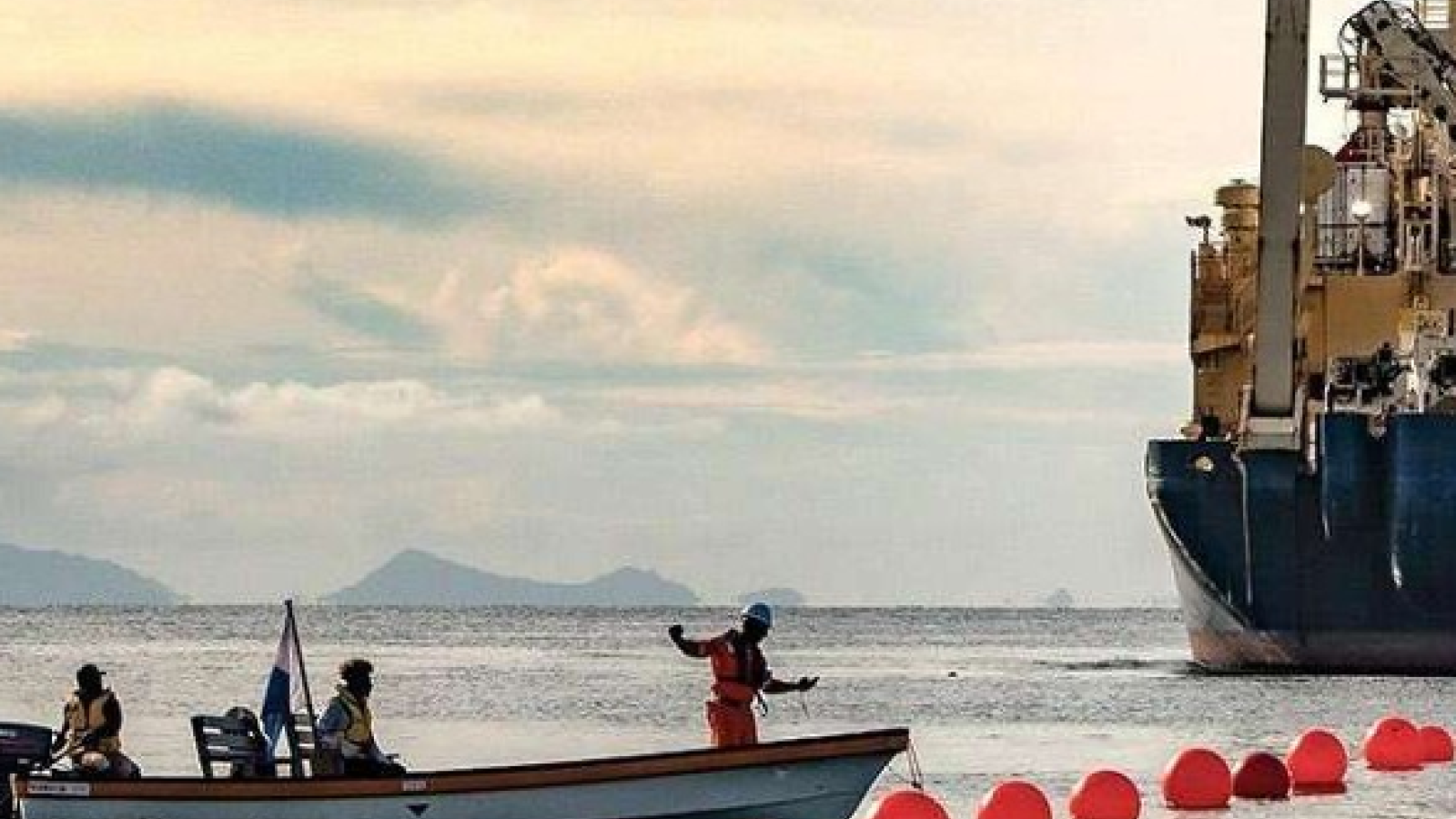
Report cover with photo of wharf and cable ship and title of report.
2026-08-13

The Role of Governments in Subsea Cable Repair: Views from the Indo-Pacific – Read more

Submarine cables carry almost all international data for the island nations of Oceania. As digital economies grow and dependence on connectivity deepens, this infrastructure is increasingly seen as a strategic asset for both socio-economic development and national security. The connectivity it provides is a public good, but the majority of the cables, and the system that repairs them are privately owned and commercially operated under maintenance agreements. Governments worldwide are asking what role they should play in ensuring cables can be reliably repaired when they fail, a question sharpened by a changing security environment and by cable fleet capacity pressures. This paper sets out what the commercial system in Oceania provides, where its limits sit, and a non-exhaustive list of options available to governments. The commercial system works under normal conditions. The great majority of cable faults are caused by fishing and anchoring and repair operators routinely service this need, usually under a maintenance agreement, at a balance of service level and cost for its customers. The interdependency between communication networks is an incentive for cooperation between competing system owners and by extension repair operators because each company's network depends on others for redundancy. There are several key factors that could disrupt current trends. The significant increase in cable kilometres planned for the region leaves an open question over whether fault numbers will rise in proportion. Climate change is increasing the frequency and severity of natural hazards. Extreme natural disasters can create multi-fault events, and severe storm events can reduce the windows in which ships can safely operate to repair them. Hyperscaler-owned cables are now a significant and growing presence in the region, but how those owners interact with existing maintenance structures in the future is still taking shape. Two failure modes are worth separating. The first is slow repair under normal conditions when extended outages exceed what a country can absorb. Long Pacific Ocean transits cannot be designed out, but other components, including regulatory friction and fault reduction, can be addressed. The second is non-response or unavailability of a repair capability in a crisis, where the question is whether…

Read more...

Cable construction Cable security Legal and regulatory frameworks Resilience planning Telecommunications infrastructure